Many of us understand the use of our savings account, it’s where most of our money lives, with the added benefit of easy access to it. However, a savings account does not do much in terms of returns, your upfront interest sits at an average of 0.25% p.a. So, where should you keep your money for better returns? The obvious answer would be to choose a fixed deposit, one that offers a high-interest rate, and say goodbye to a portion of your money for a while.
But is there a better option?
Before we get into that, let’s first understand what the difference is for Savings, FDs, Money Market Funds, etc.
Savings Accounts
As we all know, this is the most accessible and the most necessary banking tool to have. The process is simple, pick a bank, sign-up, open an account. Some banks do not even have a minimum age for this. You get a debit card to pay for things with and make cash withdrawals. However, the return rate for savings accounts is a low minimum average of 0.25% p.a.
If you are in the small percentage of people with lots of money, and I mean lots of money. There are savings accounts that can offer you a yield of up to 3% interest on savings, however, it requires you to have a large sum of savings which is up to RM100,000 in order to qualify.
Not all of us live in this income bracket, so if you’re like the majority of middle-class Malaysians and have an average monthly income of RM 5,000, you’re looking at an interest averaging from 0.25% to 1.5% p.a.
(source: RinggitPlus, Savings Account)
Fixed Deposits
Fixed deposits are also a great option for you to save money and earn higher returns. Fixed Deposits (FD) can offer you interest rates of maybe up to 1.85% p.a. on a smaller amount of money. However, with FDs, the bank will always impose more hidden terms and conditions that are often missed by the layman. The most obvious rule, being a lock-in period. This means that once you have committed to the deposit, you can’t withdraw your money until it reaches maturity. If you wanted the money for an emergency, you would risk losing the entire interest earned during the period of your deposit up to that point.
Types of Fixed Deposits
There are 2 types of Fixed Deposits, a short-term FD, and a long-term FD similar to your short-term vs long-term goals.
A short-term fixed deposit can range from a minimum bond of 1 month to a year. The flexibility this offers is that you can set a short-term goal and calculate what you intend to get out of that year. Unfortunately, the shorter-term does not really allow your fund to grow.
Long-term fixed deposits range from a period of 1 year up to maybe 5 years. In the long run, it will surely give you an idealized return. With a long-term FD, the younger you start the better it works, start saving early and who knows when you are ready to purchase your first home, that savings can come into play. The same rules still apply. You will not get to enjoy the returns on that money until your tenure is over.
Putting your money into a Fixed Deposit is actually really good if you have a savings plan or you can do without the cash for a while. Then again, why not have the best of both worlds.
The Third Option
Money Market Funds
Money market funds (MMFs) are essentially unit trust funds that invest highly in liquid short-term money market instruments. It is basically large sums of money invested in deposits short term to earn a higher income. MMFs are also backed by financial institutions and they offer a stable income with very low risk.
This type of safe saving option is what Versa Cash is offering. Versa Cash is a digital cash management platform that will help you get the best out of your idle cash responsibly and provide its users the flexibility to withdraw their funds deposited anytime while earning fixed deposits like monthly returns without a lock-in period. There are no fees and charges by Versa Cash and there is no commitment. Versa Cash is the best option for you, if you need to have the money on hand but want to earn at the same time. Refer here to know how Versa Cash works.
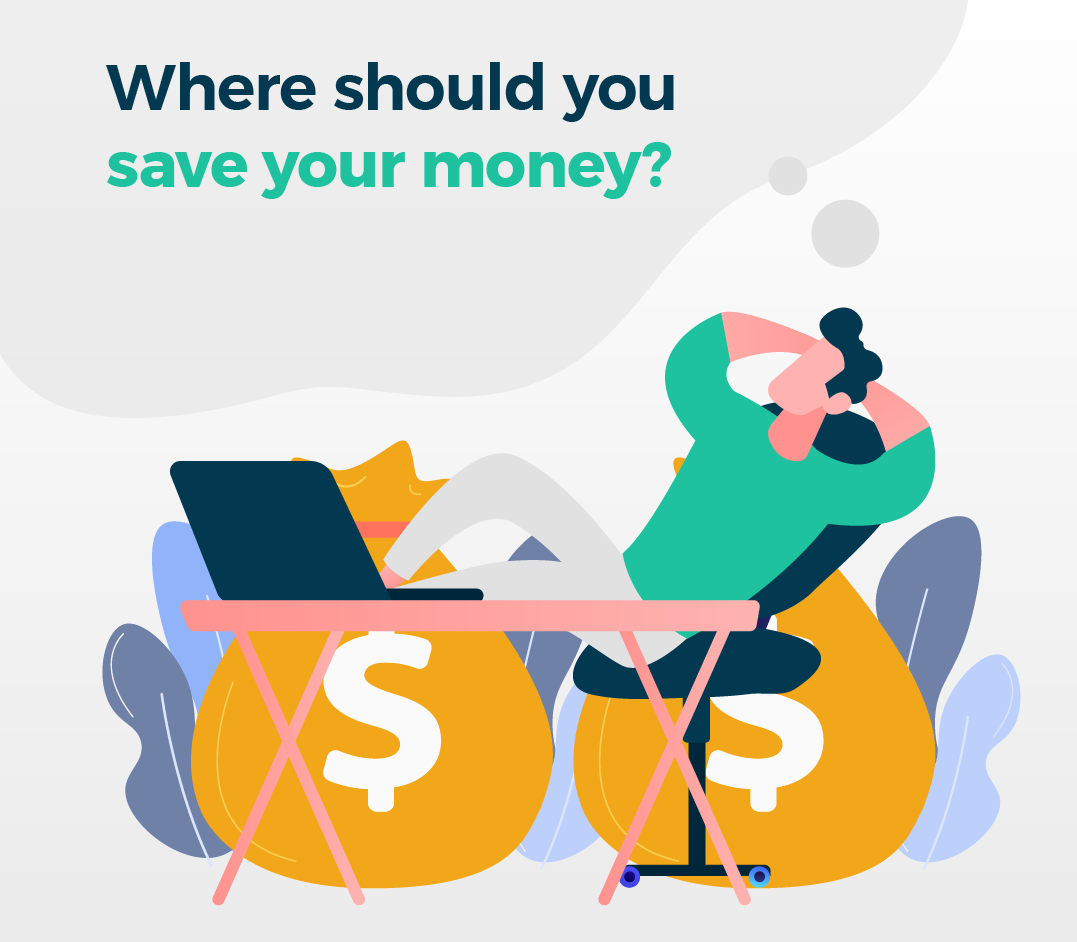
So back to that question. Where should you save your money?
The answer is, wherever you feel most comfortable. Just remember there are always smarter options!