
Money is hard to obtain and far too easy to slip away. To avoid making bad financial decisions, you need a solid money management strategy in place – and it starts with budgeting.
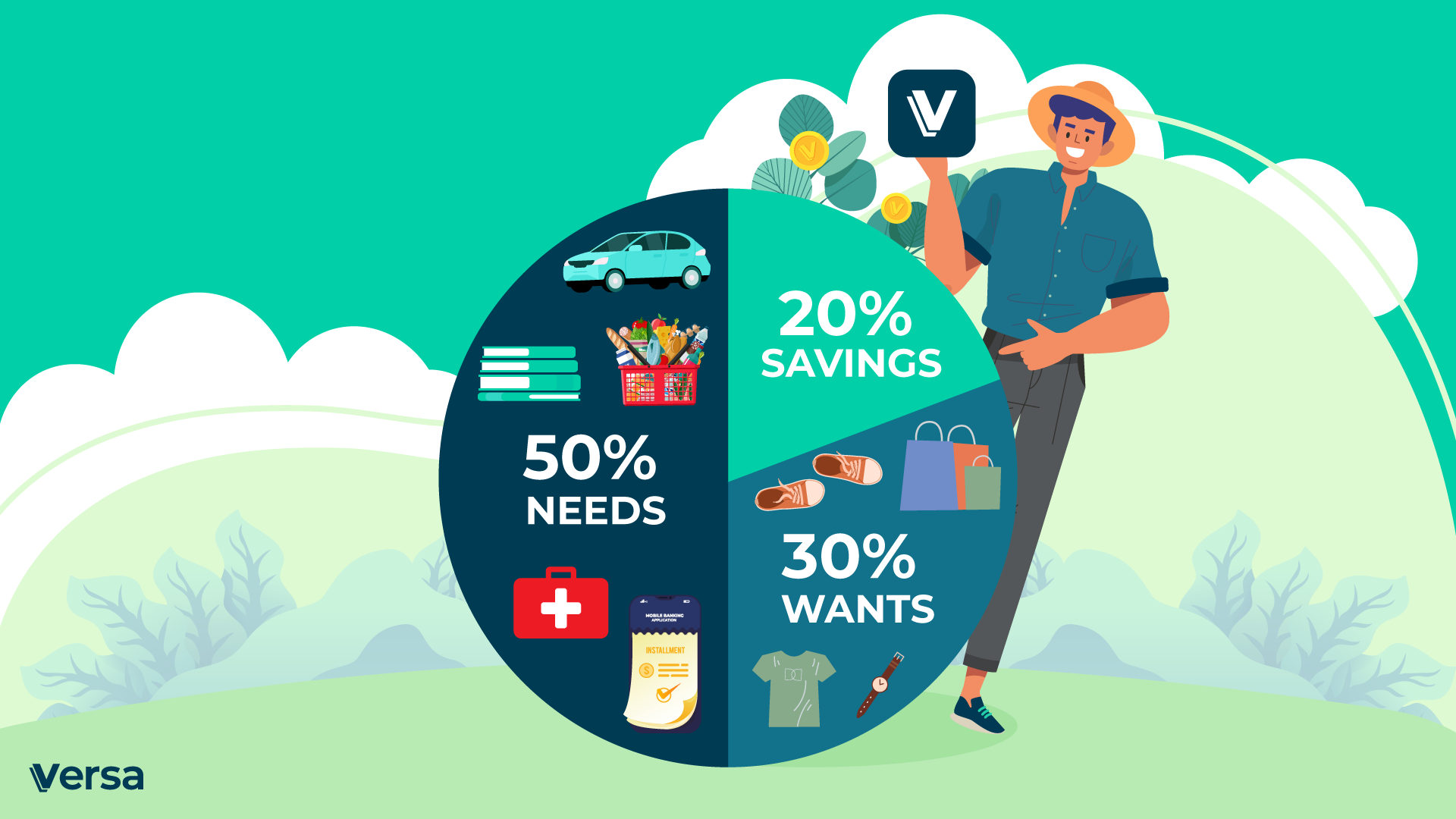
A budget is essential to everyone’s financial goals, regardless if they are short, medium, or long-term. A popular budgeting method in the personal finance space is the 50/30/20 budgeting rule popularised by US Senator Elizabeth Warren. Let’s break it down:
Needs
50% of your take-home pay goes towards essential needs – expenses that you absolutely need to survive. These needs include rent, utilities, food, groceries, medical insurance, and transportation. The goal is to keep your essential needs under 50% of your net income.
Wants
The next 30% of your take-home pay can be allocated to wants: the non-necessary expenditures such as dining out, Netflix subscriptions, shopping for clothes, etc.
In the beginning, you may think that the 30% allocation for wants is small but this budgeting rule isn’t here to prevent you from enjoying life. It is to help you make conscious money decisions and optimize where it is spent. If you are confused about whether something is a need or want, just ask yourself, “Can I live without this?”. If the answer is yes, that’s probably a want.
Savings
The remaining 20% is probably the most important part. It goes towards your future, saving up for emergencies, or investing in your long-term goals like retirement or a house of your own. Keep your savings and investments in a place far away from your shopping tendencies. By consistently putting aside 20% of your take-home pay each month, it can help you build wealth over a long period of time. The key to building wealth is being consistent with saving and investing.
Conclusion
The 50/30/20 rule is a straightforward and uncomplicated way to budget, especially for young earners who are just starting their careers. In any case, breaking down your spending will enable you to determine how and where you should improve, thus bringing you closer to your financial goals.
Have any questions?
Ask here!